
Last updated November 22, 2026
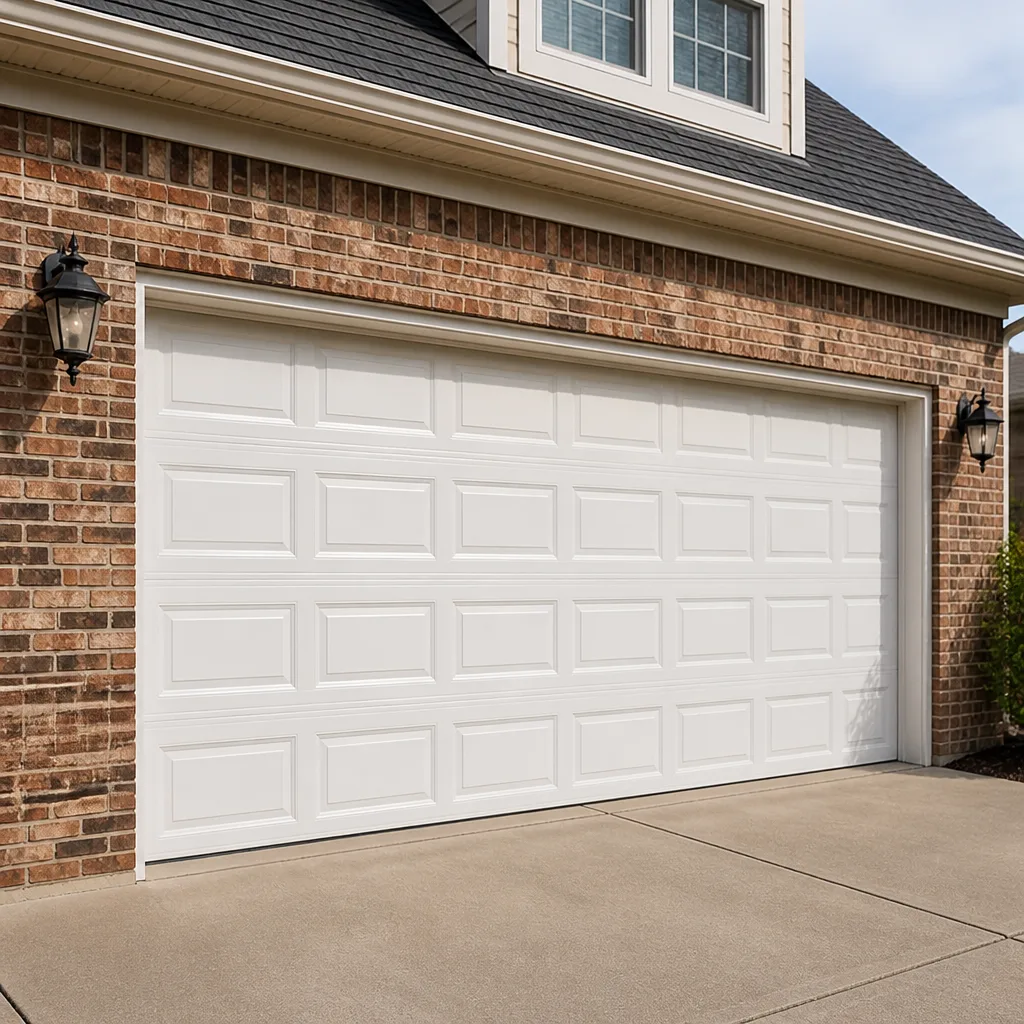 Raised-panel steel
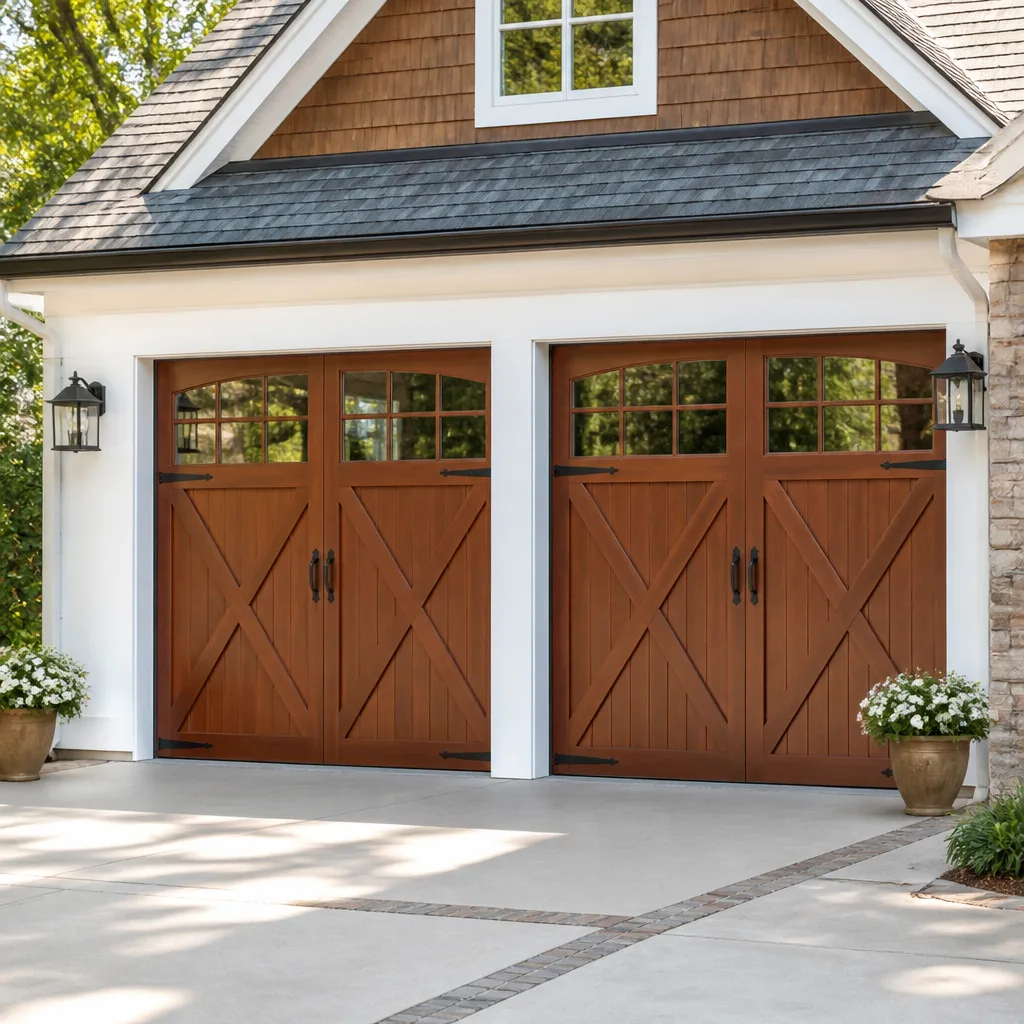 Carriage house
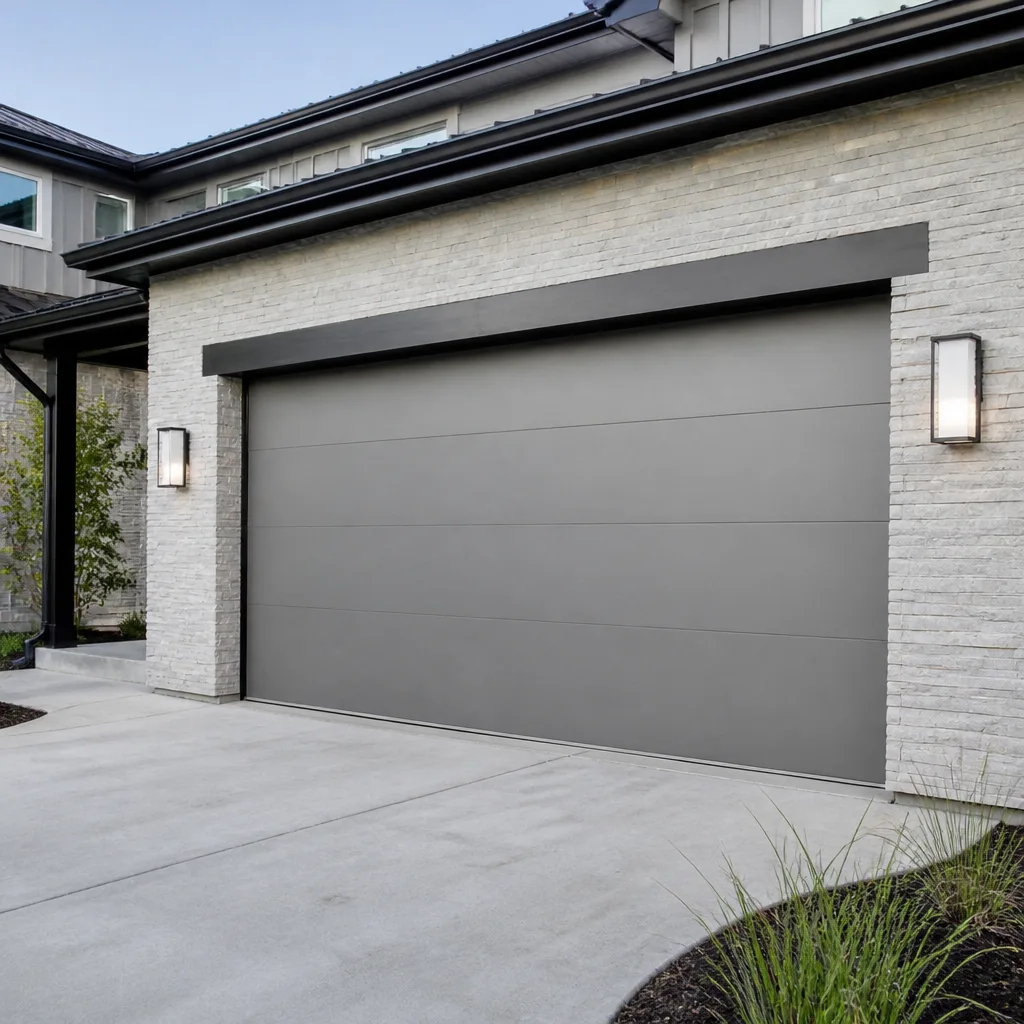 Modern flush
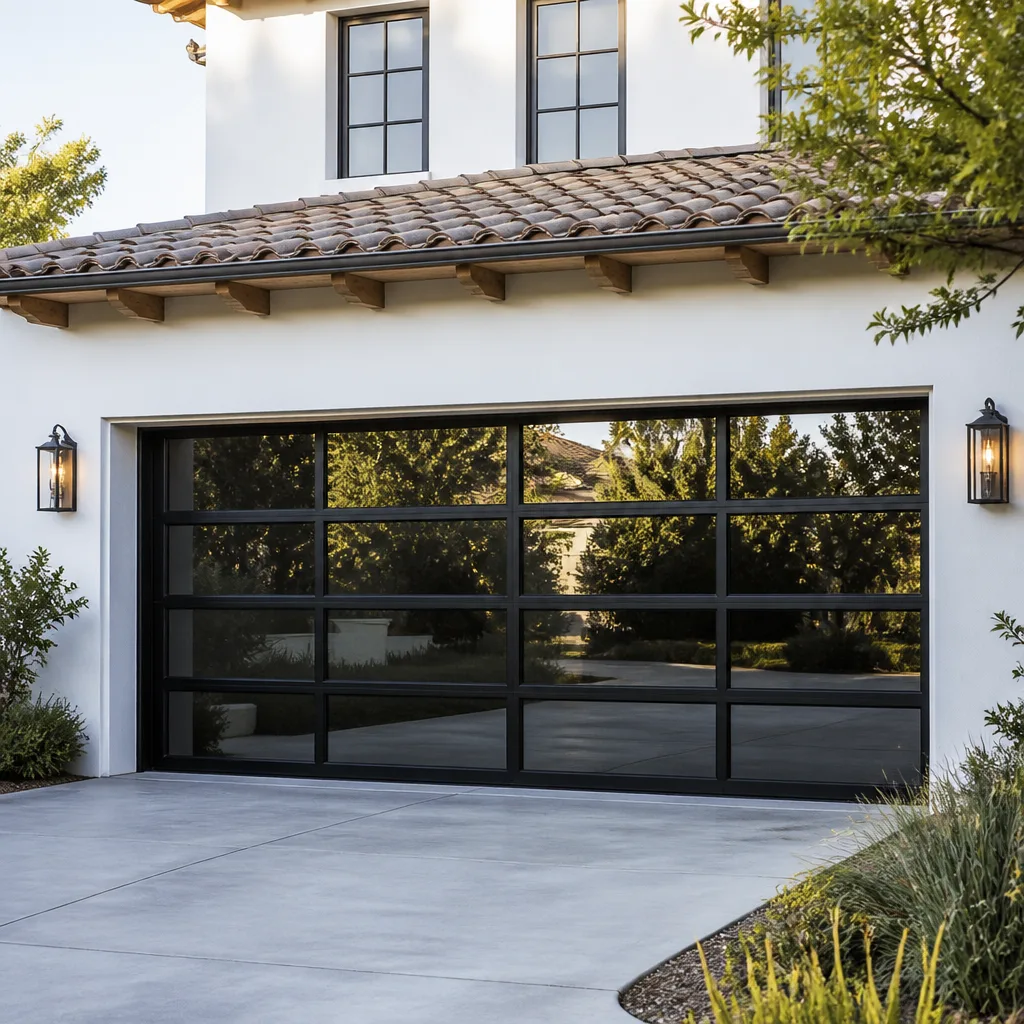 Full-view glass
 LiftMaster openers
 Chamberlain openers
Full 25-point door and opener safety check with every visit - springs, cables, rollers, tracks, and your LiftMaster or Chamberlain opener included
You get a price before we start. It does not change when the pro arrives.
Get your free estimateGarage Door Warning Signs: A Centreville Homeowner’s Reference Guide
A garage door that’s about to snap a spring doesn’t go from fine to broken overnight. It tells you something is wrong in at least three ways first, but most homeowners have learned to ignore those signals because the door still opens. That’s the trap. A door that opens today can be one or two weeks from a failure that leaves a car stranded inside or a house open to the street. This guide decodes the warning signs that get dismissed as normal wear, sorts them by urgency so you know what to watch and what to fix this week, and explains what each sound and symptom usually means. We’ve written it from Centreville, where the swing between humid summers and freezing winters works on springs and cables year after year.
Quick Answer
The main garage door warning signs are a loud bang or pop, a door that reverses before closing, visible gaps or fraying in the springs and cables, jerky or slow movement, and any door that won’t stay up on its own. Grinding points to rollers and tracks; popping points to springs. If the door drops or a cable is visibly broken, stop using it and call a professional.
Styles & brands we work with
- Raised-panel steel
- Carriage house
- Modern flush
- Full-view glass
- LiftMaster openers
- Chamberlain openers
Table of Contents
- The Three Tiers of Warning Signs
- What Each Sound Tells You
- Visual Signs You Can Check Safely From the Ground
- Opener Behavior That Points to a Mechanical Problem
- Spring and Cable Failures in Centreville’s Climate
- How Long Can You Keep Using the Door?
- A Simple Monthly Check You Can Do Yourself
- Why Warning Signs Appear More in Spring and Fall
The Three Tiers of Warning Signs
Not every symptom means the same thing. Some are a note to keep watching. Others mean book a visit. A few mean stop now. Sorting what you’re seeing into these three tiers is the fastest way to decide what to do before you pick up the phone.
Tier 1: Monitor
- A slight rattle or squeak on the way up or down that comes and goes
- A door that hesitates for a second at the start of travel
- Minor paint wear or light rust at the bottom panel hinges
- Slightly louder operation than last year, with no change in how it moves
These are the early signals. Nothing is failing yet, but the door is telling you the rollers, hinges or springs are past their smoothest point. Keep an eye on them and mention them when you next have service done.
Tier 2: Schedule Service Soon
- A grinding or scraping noise that shows up every time the door moves
- The door reverses partway down without hitting anything
- One side of the door rises or drops before the other
- The opener strains to lift the door or lifts it more slowly than it used to
- A spring that looks stretched compared to the one beside it
At this stage the door still works, but a part has clearly moved into wear. Getting ahead of it usually means a simpler repair than waiting for the failure.
Tier 3: Stop Using the Door Now
- A loud bang or snap from above the door, followed by the door refusing to lift
- A spring with a visible gap or a curled, tangled end
- A cable that’s hanging loose, kinked or visibly frayed
- A door that drops fast or free-falls when you try to close it
- A door standing open that won’t come down
Springs and cables carry the full weight of the door. When one of them has failed, the other is doing double duty with no warning. If you’re seeing any of these in Centreville, shut the door manually if you safely can, leave it alone, and call a professional. Don’t run the opener to test it, and don’t try to lift it yourself.
What Each Sound Tells You
Sound is the most useful diagnostic clue a garage door gives you, and most homeowners lump every noise into one category: it’s just loud. In our experience the type of sound narrows down the failing part before anyone reaches the door. Here’s how we read the main ones.
- Grinding. Metal on metal, usually rollers that have lost lubrication or a bearing that’s worn flat. It grows worse in dry weather. Grinding points to the roller and hinge side of the door, not the springs.
- Popping or snapping. A sharp pop from above the door often means a spring has broken, or a pulley has bound up. A single loud bang with the door not lifting is almost always a snapped torsion spring.
- Squealing or high-pitched squeak. Usually a dry roller or a bearing running without grease. Low urgency, easy to address.
- A rhythmic thump or clunk as the door travels. Tracks that are out of alignment or a bent hinge pressing against the door panel. It tends to get louder month over month.
- Rattling that stops when the door is still. Loose hardware at a hinge or a bottom bracket that’s working itself free.
- Openers clicking but not moving the door. That’s an opener problem or a stripped gear inside the unit, not the door hardware. This is where garage door opener repair comes in rather than a door repair.
One rule of thumb: noises from above the door usually point to springs and pulleys, and noises from the sides point to rollers and tracks. When two sounds overlap, sort out the louder and more regular one first.
Visual Signs You Can Check Safely From the Ground
You can learn a lot without touching anything. Everything on this list is visible standing on the floor of your garage. Do it with the door closed and the opener disconnected from the door with the release handle, so nothing moves while you look.
Springs
- Gap or break. A torsion spring above the door should look like one continuous coil. A clean gap, usually about the width of a finger, means the spring is broken. Leave it alone.
- Stretch. Extension springs run along the sides. If one looks longer and looser than the other, it has stretched past its job.
- Rust. Orange flaking on a spring, especially near the coil ends, is a sign the metal is corroding. Centreville’s humid summers push this along faster than dry climates do.
- Bent or uneven coil. A torsion spring that looks warped has likely been overloaded by a failing balance.
Cables
- Fraying or birdcaging. A cable that’s unravelling or has loops lifting off the drum is a stop-using sign.
- Loose or hanging. Cables should sit under tension against the drum. A drooping cable means the spring has likely failed or the drum has slipped.
- Off the drum. A cable wound to one side or off its groove will usually drag the door off-balance next.
Panels, Tracks and Hardware
- Bent or dented panels, which stress the hinges and springs
- Gaps between the door and the frame or ground when the door is closed
- Tracks with a dent or a kink, or brackets that have pulled loose
- Bottom brackets that look cracked or shifted
- Hinges that look half-torn from the panel
Anything that shows a break, a gap or a kink goes on the stop-now list. Call a professional rather than trying to fix it, because a spring under tension stores serious energy and moving it wrong can cause injury. Springs are dangerous, and we handle them so you don’t have to.
Opener Behavior That Points to a Mechanical Problem
When the door acts up, the opener is usually the first thing homeowners blame. Often it’s the messenger, not the cause. The opener motor feels a door that’s gone heavy, and it tells you about it through its behavior. These signs matter because they point to the door hardware, not the sensor.
What to watch for
- Slower travel. If the door now takes noticeably longer to open or close than it used to, the opener is working harder than it should. The door may have lost balance or a spring may be weakening.
- Extra force, then reversal. An opener set to push harder can still lift the door, but the safety reverse may trip partway through. That’s a force problem, not a sensor problem, and continuing to run it wears down the opener’s gear and rail.
- Mid-travel reversal. The door reverses a third of the way down or halfway up with nothing in the way. This usually points to binding in the tracks or hinge, or a force setting being maxed out by a heavy door.
- Repeated open-close loops. If the door reverses and immediately closes again, the opener’s force limits are fighting the hardware.
- Stalling at the start. A motor that buzzes and clicks but won’t turn usually has a stripped gear inside the unit, which is a straight opener repair. Brand knowledge matters here, since a LiftMaster or Chamberlain unit with a stripped gear is a different job from a Genie or a Craftsman, and a technician who knows the model doesn’t have to guess.
If the opener reverses every time and the door looks fine, don’t assume the opener is faulty. Have the door’s balance checked first, and once the mechanical problem is sorted, the opener will usually behave. Split diagnosis is where a partial fix tends to happen, which is why we start with the full picture: springs, door weight, tracks and opener in one visit.
Spring and Cable Failures in Centreville’s Climate
A garage door in Centreville goes through more expansion and contraction than a door most places. Summers are humid enough to rust hardware that never gets oiled, and winters swing cold enough that springs contract and stiffen. That cycle, repeated every year, is what wears out a spring early. It’s also why a door that seemed smooth last summer can feel heavy by late fall.
Most homes in Centreville rely on either torsion springs, which mount above the door and twist, or extension springs along the sides. Both store force to lift the door, and both lose some of that force every year. A spring doesn’t usually snap without warning. It sags, it stretches unevenly, and the door picks up a slight stagger on the way up. When a homeowner notices one side lifting before the other, that’s a spring that’s losing its job.
The signs that mean a spring is close to failing
- The door feels heavier when you lift it with the opener disconnected
- A spring sits uneven with its pair
- A spring shows rust at the coil ends
- The door won’t stay open when you raise it by hand halfway
- The opener has been reversed or reset repeatedly by a homeowner trying to get it to close
This is where garage door spring repair belongs, and it’s the first thing we check when a door starts acting up. Spring repairs need the right tension, the right length of spring and a controlled release, which is exactly why they’re the repair homeowners shouldn’t take on. For homeowners with style hardware, brands like Amarr or Wayne Dalton make it straightforward to match the correct spring spec for the door’s weight.
How Long Can You Keep Using the Door?
For most warning signs, you have some time, but not unlimited time. A grinding roller will usually hold for weeks, maybe a few months, with the noise easing and worsening depending on weather. A door that’s off-balance is more pressing: the springs are doing less of the work, the opener is doing more, and a motor cover that keeps burning out is often a symptom of a door that needs proper service. A broken spring or cable is not something you can outwait. That door is a stop-use today item.
Honest timelines
- Squealing or rattling: weeks to months, worth getting looked at during your next service
- Grinding: weeks, and the grind usually tracks the failure before it happens
- Mid-travel reversal or slow opener: days to a few weeks, and don’t push the opener to compensate
- A door that won’t stay up: days, sometimes less if the balance is badly off
- Broken spring, broken cable, door drop or a gap in the spring coil: stop now, and call before trying it again
If your door is somewhere in the middle of that list and you’re not sure where, the simple rule is this: keep using it only if it’s working the way it did a year ago. Any change in how it moves is a sign the door is asking for help.
A Simple Monthly Check You Can Do Yourself
Once a month is enough to catch most problems before they become a repair. This takes a few minutes and only needs you and a flashlight. Everything here is observation, not part of the repair.
- Close the door and look at the whole spring from the ground, top to bottom. A gap, a stretch or heavy rust goes on your list.
- Look at both cables where they run along the sides and onto the drum. Fraying, drooping or off the drum means stop and call.
- Pull the release handle to disconnect the opener, then raise the door by hand about halfway. It should be easy and should hold its position. Let it down slowly, using only one hand.
- Reconnect the opener and run the door once. Listen for grinding, popping or squealing, and watch whether both sides move evenly.
- While the door is closing, pass a hand through the beam near the ground at the base of the doorway. The door should reverse cleanly, and should not be forced to overcome anything.
- Walk around the door and note anything new: a dent, a loose bracket, a cracked hinge or a gap at the bottom.
Write the date on your findings. If a noise or hesitation shows up several months in a row, don’t chalk it up to weather. That’s the door telling you it’s due. If it matters to get it seen quickly, garage door repair covers the full range of these symptoms in one visit, from the noise to the panel and the opener in between.
Why Warning Signs Appear More in Spring and Fall
If your door gets noisier at certain times of year, that’s not imagination. A garage door is mostly metal under tension, and metal reacts to temperature. In Centreville the swings are real: warm, humid summers that rust and swell; cold winters that make springs brittle and tracks shrink slightly; and the shoulder seasons where the temperature crosses back and forth within a week. The transition from summer to fall is when we hear the most about doors that “suddenly got loud.”
The pattern in Centreville is fairly consistent. Doors that were smooth in July start grinding in October as rollers lose grease in the cold. Springs that survived a mild winter often surrender in the first real cold snap, because steel that is already tired doesn’t like contraction. Humidity is the other half. An untreated spring, hinge or track surface in a Centreville garage takes on rust through the summer, and that’s when extension springs start to sag unevenly.
The good news is that a little awareness goes a long way. Lubricating the rollers and hinges in the fall, before the cold sets in, makes a difference on the noise. It won’t fix a worn spring, but it does make the door easier on the opener going into winter. And if you’ve noticed a new sound every year around the same time, that’s a signal to get the door serviced before it becomes a spring. For a door that needs a full look, or one that’s given up entirely and needs Centreville garage door repair, we can book an assessment and confirm what the door actually needs. If a brand or model matters, mention it. We work on Centreville Garage Door Repair for that call.
Common Mistakes to Avoid
- Running the opener to check a failed spring. Once a spring is broken, the opener is lifting the full door weight on its own and can strip its gear. Have the spring checked before giving the opener a reason to fail too.
- Assuming the sensor is at fault every time the door reverses. Reversal is just as often a force problem from a heavy door or a binding track. Check the vertical lines of the beams first, then have the balance checked if the sensors look fine.
- Tightening a spring or cable yourself. Springs are under significant tension and moving one wrong can cause serious injury. Springs are dangerous, and the job belongs with a technician who has the tooling to control the release.
- Ignoring the first grind, then living with it. A noise that repeats every cycle wears the rollers and hinges faster, and the one you noticed tends to get worse, not settle.
- Letting a driveway that collects water leave its mark. A wet spot near the bottom of the door is where the bottom panel and the hinge below it will rust first in Centreville’s humid summers. Keep the base of the door dry and the paint intact.
- Buying a new opener before checking the door. If the door has lost balance, a new opener will strain the same way. Fix the door first, then decide if the opener needs a replacement.
- Putting off a door that won’t stay up. A door that drops on its own is a weight and balance problem, and leaving it in use is how a small repair becomes a panel replacement.
See the difference
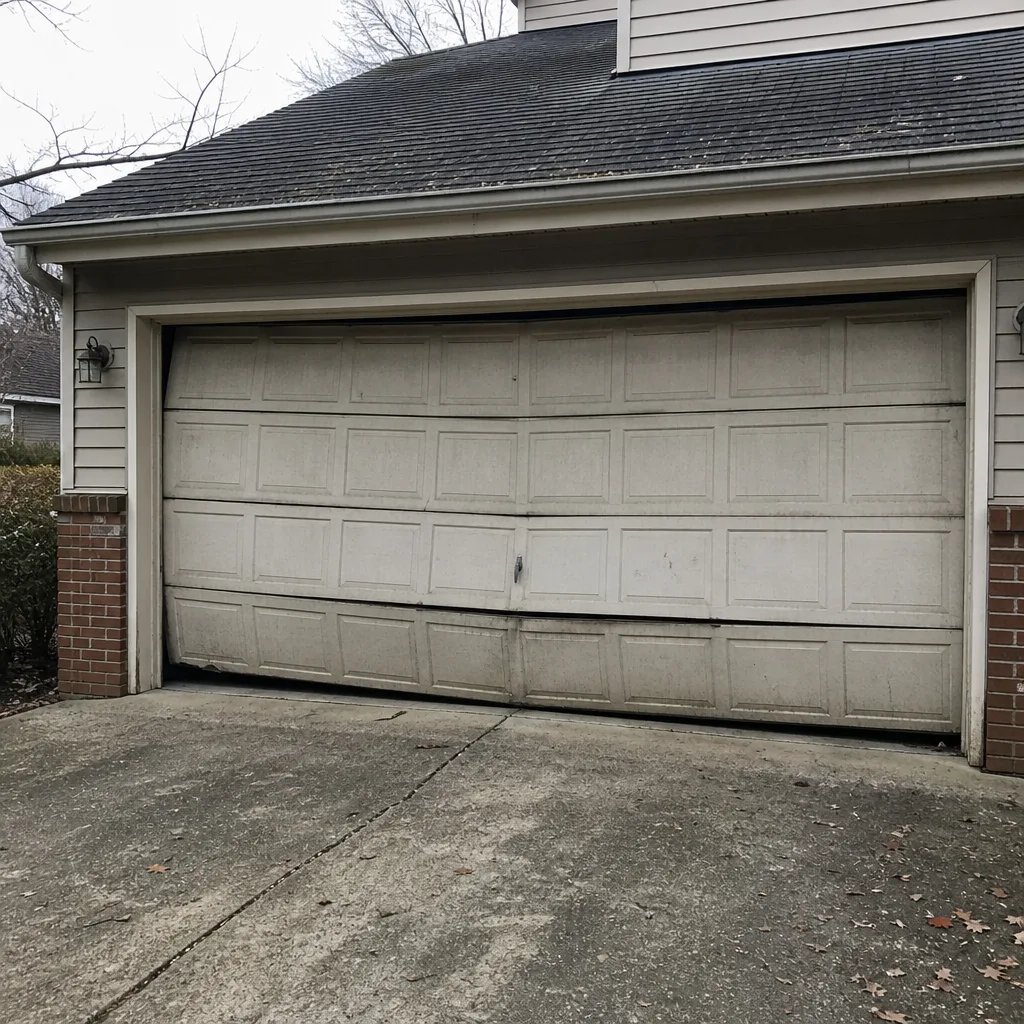 Before
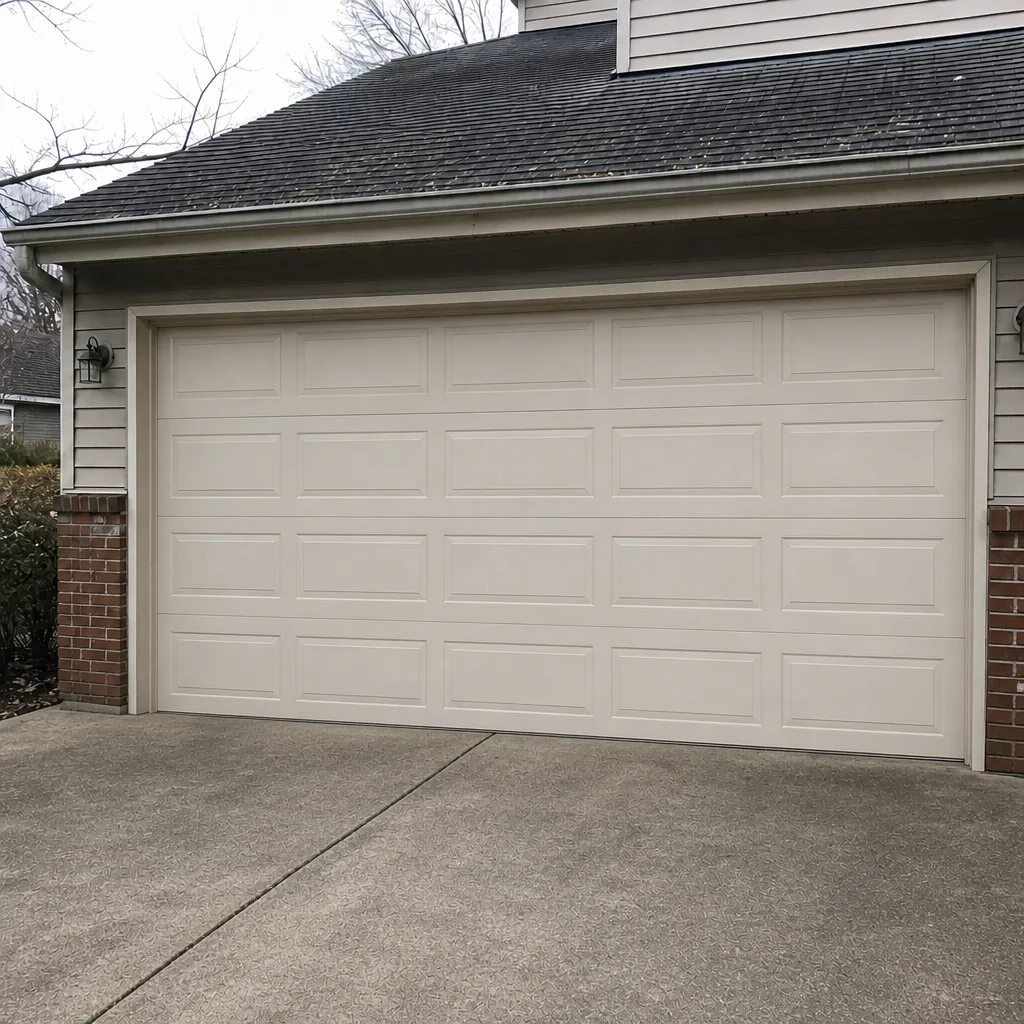 After
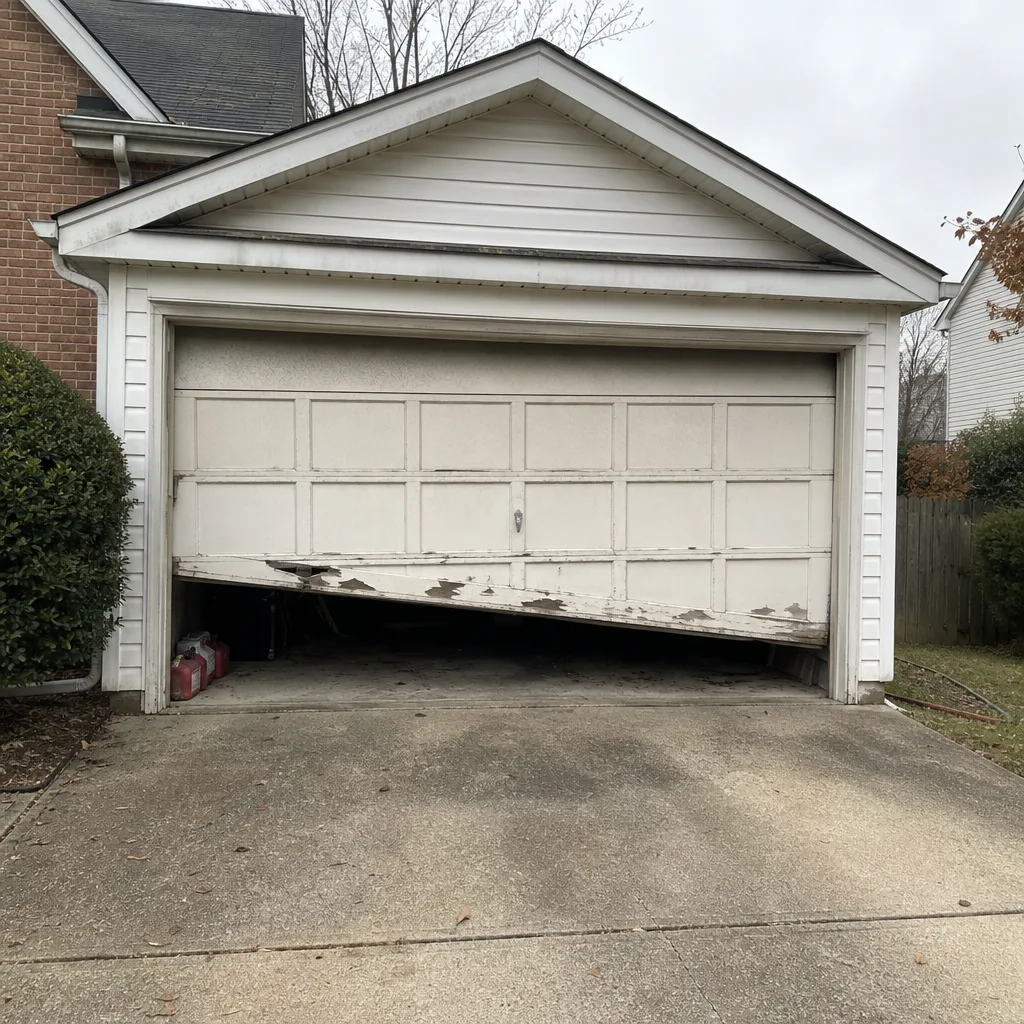 Before
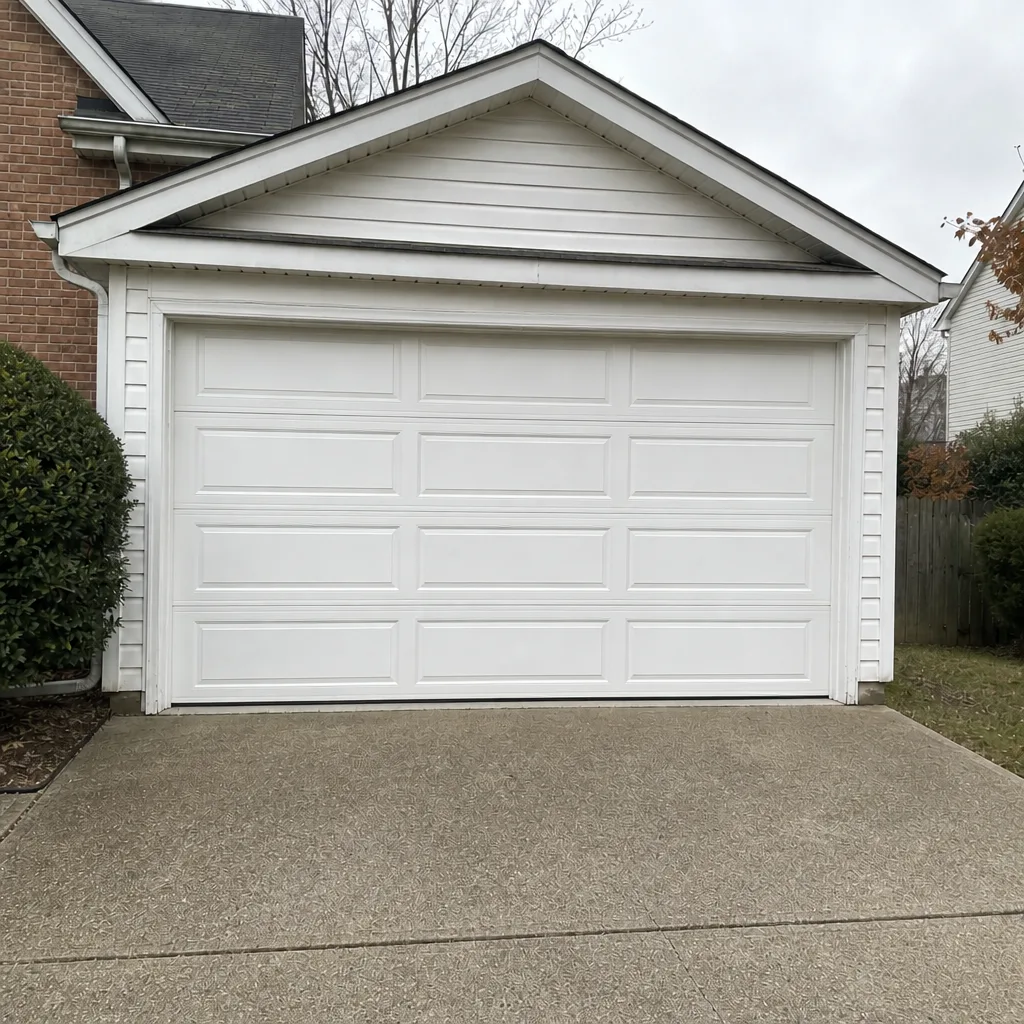 After
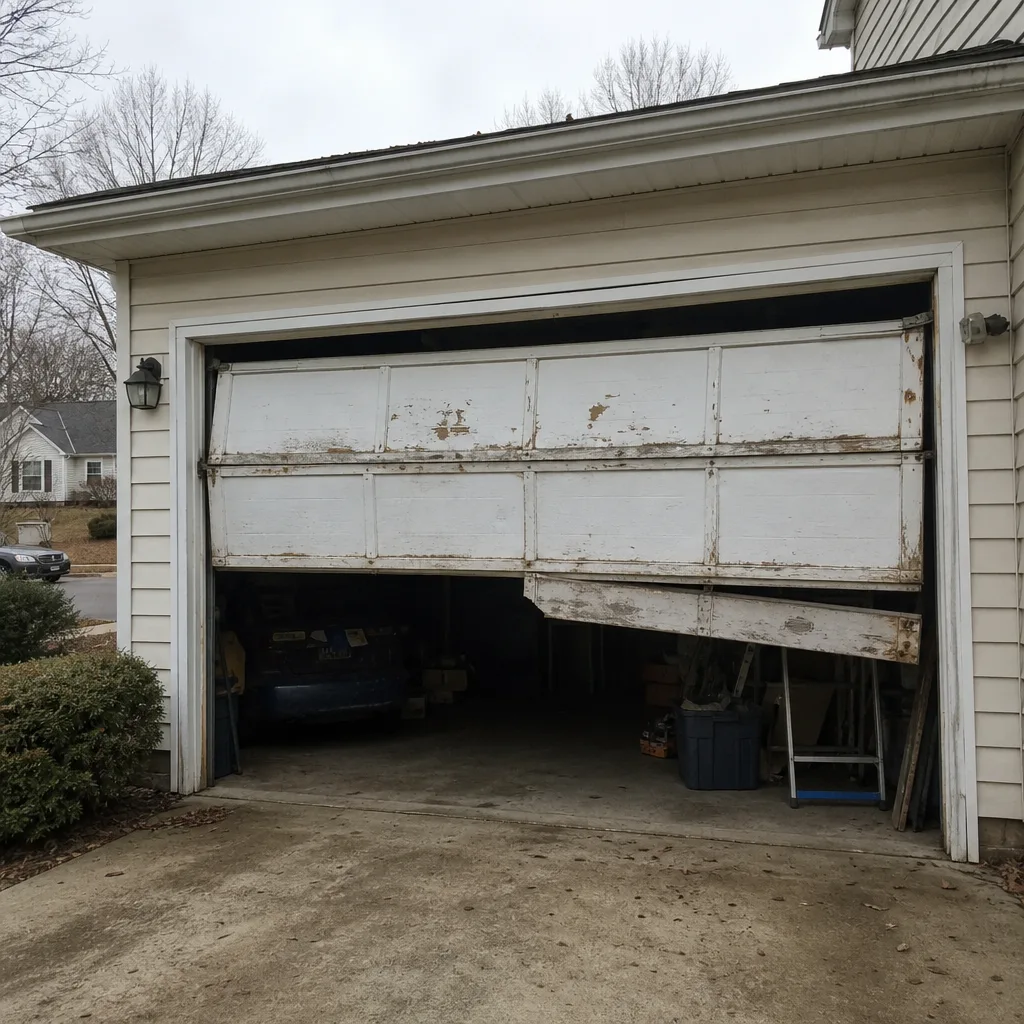 Before
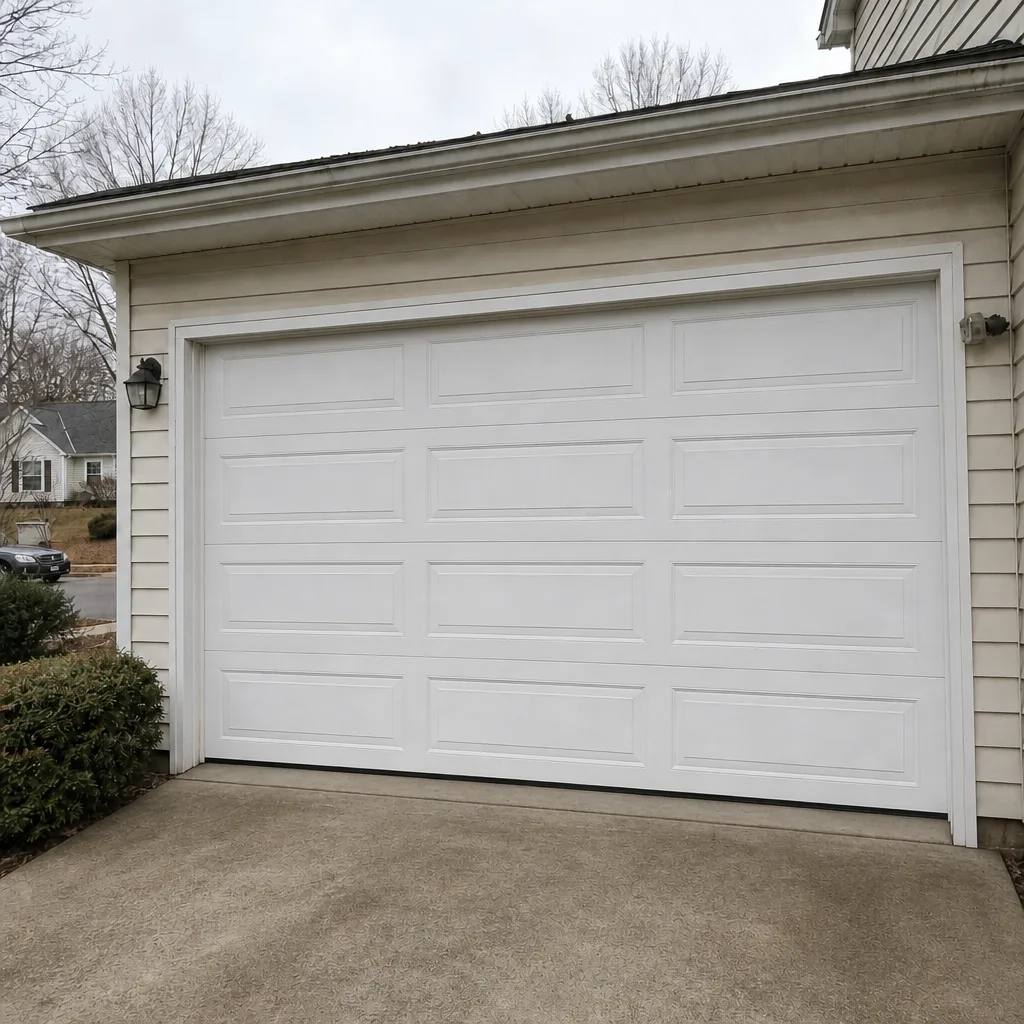 After
When to Call a Professional
Call a professional if a spring is broken, a cable is frayed or off its drum, the door drops on its own, or the opener runs but the door doesn’t move. Those are stop-use conditions, and they need the right tools and the right technician. Call sooner than later if the door is off-balance, one side lifts before the other, or the opener is reversing on its own. And call if the door has simply changed how it sounds or moves, even if it still works, because a technician can tell what’s happening from the hardware far faster than from the symptom. Centreville Garage Door Repair offers free estimates in Centreville. We answer 24/7, with fast dispatch from 7am to 7pm, Sunday through Friday, and we work on LiftMaster, Chamberlain, Genie, Clopay, Amarr, Wayne Dalton, Craftsman and Raynor equipment. Call (877) 792-6396.
Frequently Asked Questions
Look for a gap or clean break in the coil above the door, a stretch in an extension spring along the side, or heavy rust at the coil ends. A door that’s hard to lift or that won’t stay open by hand also points to a failing spring. Call (877) 792-6396 for an assessment. Estimates are free.
A door left partly open or one that won’t close, even briefly, is a security issue. A gap at the bottom also lets moisture and pests in along with cold air. If you’re seeing a gap, have the door looked at rather than propping it with something. Call (877) 792-6396 for an exact quote. Estimates are free.
You can usually use a grinding door for a short time, weeks rather than months, since the grind tracks a roller or hinge that’s already going. Turning the opener up to compensate will wear the motor faster and won’t fix the cause. Get it looked at, and call us for an exact quote. Estimates are free.
Reversal with nothing in the beam is usually a force issue, not a sensor issue. A heavy door or a binding track can trip the safety reverse mid-travel. Have the door’s balance checked before adjusting the opener. Call (877) 792-6396 for an exact quote. Estimates are free.
Yes, especially on openers. A Craftsman or Raynor setup runs its force settings differently from a LiftMaster, and a stripped gear can sound and behave quite differently across models. That’s why we ask for the brand when you call. Call (877) 792-6396. We answer 24/7. Fast dispatch from 7am to 7pm, Sunday through Friday.
Most warning signs point to a repair, and a spring or cable replacement is much less than a new door. A door with bent panels, a warped track and a strained opener on the same visit is worth pricing both ways. Call (877) 792-6396 for an exact quote. Estimates are free.
It depends on the sign. Squealing and rattling can wait weeks to months. Mid-travel reversal or a slow, strained opener should be seen within days. A broken spring, a broken cable or a door that drops are stop-now items. Call (877) 792-6396. We answer 24/7. A call outside dispatch hours is booked into the next opening, Sunday through Friday, 7am to 7pm.
The Bottom Line
Garage doors give plenty of notice before they fail. Grinding, squealing, popping and rattling each point to a specific part. A door that reverses, staggers or strains is telling you the balance has moved. A gap in the spring, a frayed cable and a door that drops are the stop-now signs. If you’re in Centreville, the seasonal swing is what pushes these warnings into actual failures, and a monthly check from the ground catches most of them before they get expensive. Keep the door above stop-now on the tiers, book the middle tier before it accelerates, and leave the springs to a technician.
Written by the team at Centreville Garage Door Repair.