
Top Signs You Need Garage Door Service – Don’t Ignore These
A garage door rarely fails without warning. It gives you weeks of signals first: a new grind, a shudder on the way up, a gap in the spring coil you’ve never noticed before. Most homeowners chalk these up to the door “just getting old” and wait for it to quit. The few who read the signs early usually spend less and stay safer. If you’d rather have a set of trained eyes on it than guess, call (877) 792-6396. We answer 24/7.
What Are the Earliest Signs You Need Garage Door Repair?
The earliest sign is a change in sound or motion you didn’t ask for. A door that used to glide quietly and now announces itself is telling you a component is wearing. Listen for it before you see it. We’d rather walk a Centreville homeowner through an early squeak than replace a snapped spring later.
Here’s the short list of early warnings:
- A new or louder noise on open or close
- The door pausing, stuttering, or reversing without being told
- One side of the door rising slower than the other
- Visible rust, gaps, or fraying on the springs or cables
- The opener running but the door not moving smoothly
None of these mean the door is about to fall. They mean a part is asking for attention. The tricky part is that some doors only misbehave sometimes, and “sometimes” is often the most important sign of all. More on that below.
What Do the Noises Actually Mean?
Each sound points to a different component. That’s the useful part: you don’t need to diagnose it yourself, but knowing the language helps you describe the problem clearly when you call. Here’s how we map the common ones across Centreville.
- Grinding: usually metal-on-metal wear, often in the opener’s gears or the rollers. A Genie or LiftMaster unit that grinds on the way down is typically telling you the drive is straining.
- Squeaking: friction at the hinges, rollers, or track. Often the least serious, and the easiest to catch early.
- Rattling: loose hardware, a shaking panel, or a track that’s worked slightly out of alignment.
- Popping: this one earns attention. A sharp pop, especially when the door is partway up, can mean a spring is under load and about to let go. Stop using the door and have it looked at.
Same door, four sounds, four different jobs. That’s why a brand-specific technician matters: someone who knows your Clopay or Wayne Dalton hardware isn’t guessing at which part is talking.
Why Does Uneven Movement Matter?
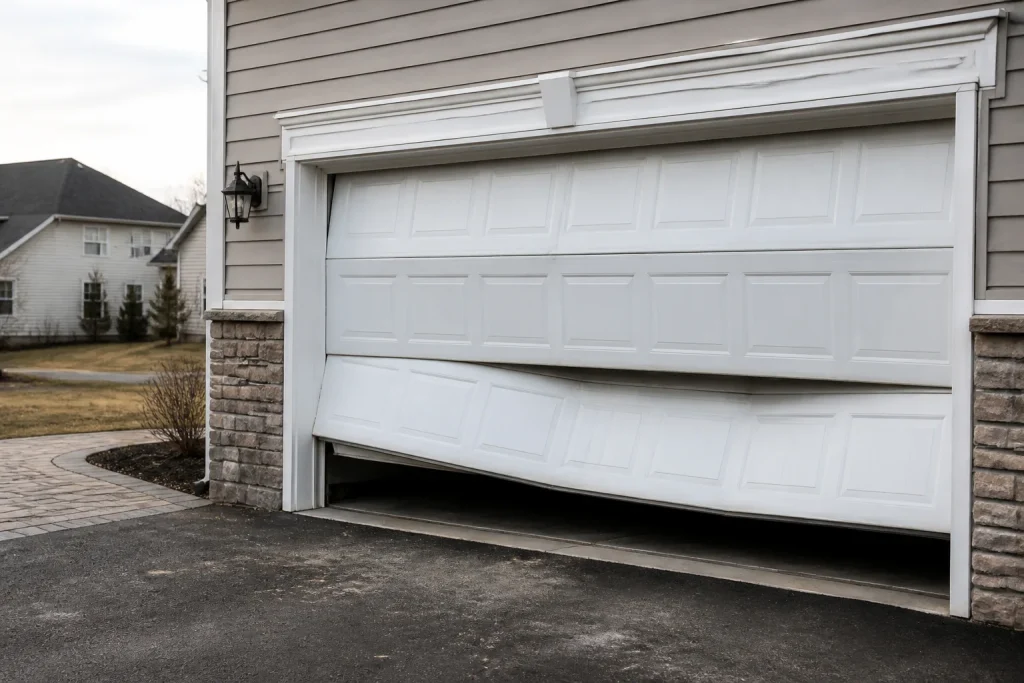
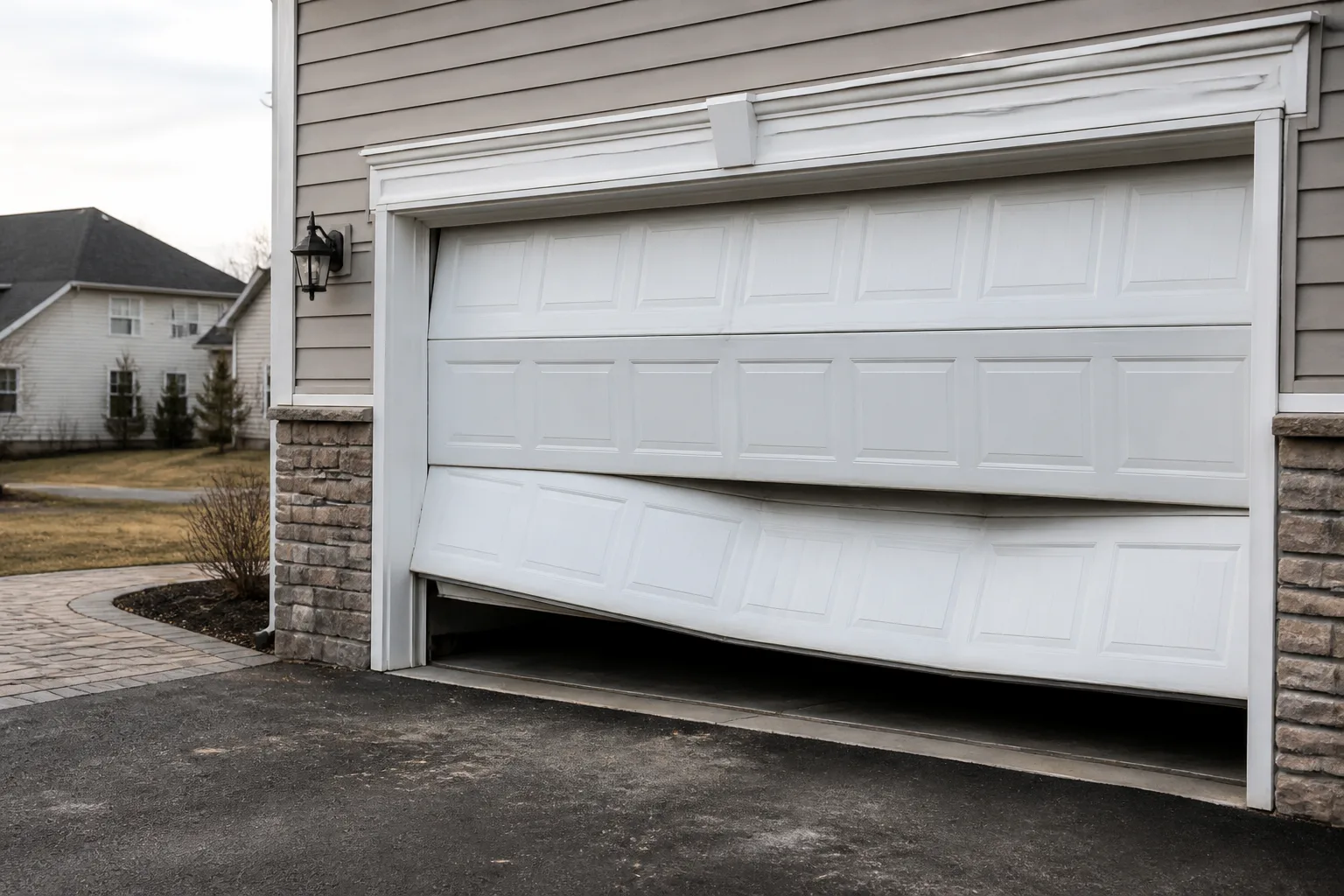
If one side of the door lags behind the other, that’s not a quirk. It usually means the springs or cables aren’t pulling evenly, and the door is working against itself. On a two-spring setup, one spring can weaken before the other, so the door tilts slightly as it travels.
That imbalance puts extra load on the opener, the tracks, and the panels. Left alone, it tends to get worse. Common causes include:
- One spring weaker than its partner
- A cable that’s loose or slipping off the drum
- A bent or misaligned track
- A roller that’s worn and dragging on one side
Uneven movement is also a safety issue, and cables and springs are exactly the parts you don’t want to test by hand. They’re under high tension and can cause serious injury if they release. This is the kind of problem to describe to a technician rather than chase yourself. If you’re in Centreville, our garage door repair team sees this often and can tell you what’s causing it.
What Should You Look For on the Springs and Cables?
Look, don’t touch. From the ground, with the door closed, you can often spot the three signs of an impending spring or cable failure without ever putting your hands near the hardware.
- Gaps in the spring coil: a torsion spring is a tight, even coil. A visible gap means it has stretched or started to fail.
- Rust patterns: heavy rust along the coil, especially in a band, points to a spring that’s losing strength. Northern Virginia’s humid summers are kind to none of this hardware.
- Cable fraying near the drum: the cables wind around drums at the top of the door. Fraying or a slack, off-track cable there is a stop-what-you’re-doing sign.
Spring work is the most dangerous repair on a garage door. Our technicians have up to 10 years of experience with it, and we handle it so you don’t have to. If you spot any of the three signs above, keep the door closed and call for garage door spring repair.
Why Is an Intermittent Problem More Concerning Than a Consistent One?
A door that fails the same way every time is easier to diagnose because the fault shows up on cue. A door that works fine most of the time and misbehaves occasionally is harder, and it’s often a logic board or sensor issue rather than a mechanical one. Intermittent trouble hides, so it can go undiagnosed longer while the underlying fault gets worse.
Watch for these “sometimes” behaviors:
- The door reverses for no visible reason, then behaves for a week
- Lights flicker or the opener clicks but nothing moves
- The remotes work at the wall but not from the driveway
- The door stops partway, then finishes on the second press
Misaligned or dirty safety sensors, worn wiring, or a control board on its way out can all show up this way. A technician who works on your opener’s brand, whether it’s a Chamberlain, a Genie, or a Craftsman unit, can read the fault codes and trace the intermittent signal instead of guessing. That’s the value of a single call covering the garage door opener repair and the mechanical side together. No handoffs, no “that’s the other guy’s department.”
How Long Do You Have Before a Problem Gets Serious?
There’s no universal clock, but the four most common issues each tend to follow a pattern. Here’s the realistic urgency window we work with in Centreville, from first symptom toward a likely failure:
- A fraying cable: often days to a few weeks. This is the one to treat with the most urgency.
- A weakening spring (gap or rust): commonly a few weeks. The door still moves, but the load on the opener climbs.
- Uneven movement: weeks, and it accelerates. The extra strain on tracks and panels adds up.
- A noisy or intermittent opener: can stretch longer, but the risk is a surprise failure at the worst moment, like a morning when the car’s boxed in.
Those windows are general patterns, not a schedule. A door that’s jerky or making a popping sound deserves attention sooner than a door that’s merely squeaking.
When Should You Call a Pro?
Call when the symptom involves springs, cables, or anything under tension, or when the door won’t close squarely and you’re leaving the house unsecured. Those aren’t DIY-friendly repairs, and a trained technician has the tools and the safety gear to handle them. Our full-scope service means one call covers diagnosis, parts, and completion, including fitting a new Centreville Garage Door Repair installation if the door has reached the end of its life.
Related services in Centreville: spring repair, opener repair, and new door installation, all handled by the same team so you’re not juggling contractors.
An emergency is a door that won’t open in the morning or won’t close at night. We answer 24/7. Fast dispatch, 7am-7pm, Sunday through Friday.
The Bottom Line
The signs of a garage door heading toward failure are specific: a new noise, one side moving faster than the other, gaps or rust on the springs, fraying cables, and doors that misbehave “only sometimes.” Catch them early and you’re usually dealing with a smaller repair. Ignore them and you’re often dealing with a bigger one, sometimes mid-morning with the car trapped inside. If you’re in Centreville and need help, Centreville Garage Door Repair offers free estimates, and the price is quoted and agreed before any work starts. Call (877) 792-6396. We answer 24/7.
Frequently Asked Questions
A new or louder noise on open or close is usually the first sign. Squeaking, grinding, rattling, or popping each point to a different component, so it’s worth describing the sound when you call. Call (877) 792-6396 for a free estimate.
Hinges, rollers, and loose hardware are often safe to check from the ground, but anything involving springs or cables is not. Those parts are under high tension and can injure you if they release. Keep your hands clear and call a technician. Call (877) 792-6396 and we’ll take a look.
Look for gaps in the spring coil, banded rust, or a fraying cable near the drum, all visible from the ground with the door closed. If you spot any of them, stop using the door and call for help. Call (877) 792-6396 for an estimate.
Yes, an intermittent fault is worth diagnosing. It often points to a sensor or control board problem that hides between failures, and it can get worse quietly. Call (877) 792-6396 and we’ll trace it.
Written by the team at Centreville Garage Door Repair.
Need Garage Door Help?
Call Centreville Garage Door Repair - the local pro we connect you with is licensed and insured, here with fast help in Centreville.
(877) 792-6396